
Centralize Product Inventory
Manage product details, stock quantities, costs, selling prices, specifications, and availability from one centralized system.
A centralized platform designed to help RJD Computer Hub manage products, inventory, bundles, sales, quotations, invoices, reports, content, and day-to-day store operations from one system.

RJD Computer Hub needed more than a standard website. The goal was to create a connected system where products displayed to customers could also be managed internally alongside inventory, pricing, sales, bundles, invoices, reports, and business data.
The result is a custom platform designed around the actual workflow of a computer retail business not a generic system filled with features the business does not need.
Running a computer store involves more than simply listing products online. Stock quantities change, new and pre-owned products need different information, bundles contain multiple components, pricing changes, sales must be recorded, and invoices need to stay accurate.
Not to build a large, complicated platform—but a focused operational system around the real workflow of the shop.
Manage product details, stock quantities, costs, selling prices, specifications, and availability from one centralized system.
Keep brand-new and pre-owned products organized in dedicated inventory sections while maintaining accurate stock information.
Create complete PC bundles from available products while keeping component quantities, costs, and selling prices transparent.
Connect sold products and bundles to sales records with clearer visibility into cost, revenue, profit, markup, and units sold.
Create professional quotations and invoices using product, customer, quantity, pricing, and transaction information stored in the system.
Turn sales data into practical daily, weekly, monthly, yearly, and custom-date reports for easier business monitoring.
Rather than introducing unnecessary modules, the system was structured around the information RJD Computer Hub needs to manage products, inventory, bundles, sales, invoices, reports, backups, and administration.
Product information flows through the same internal environment—from inventory and bundle creation to completed sales, invoice generation, and reporting—so the owner can manage key operational data without relying on disconnected tools.
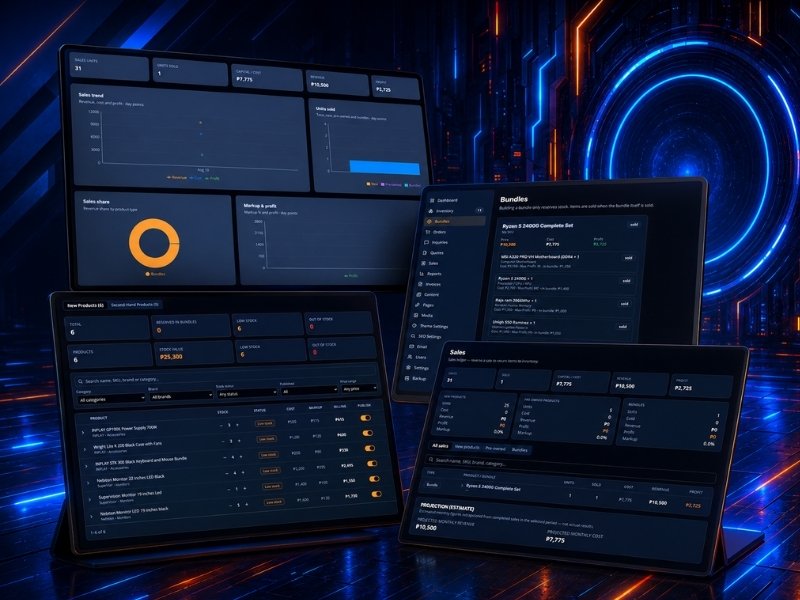
Each feature supports a practical part of RJD Computer Hub’s retail operations, with a strong focus on inventory control, sales visibility, documentation, and business data.
Manage new and pre-owned products with stock levels, specifications, acquisition cost, selling price, availability, and other important inventory details.
Record sold products and bundles while tracking units sold, capital, revenue, profit, and markup from the same system.
Generate professional quotations and invoices using customer, product, quantity, pricing, and transaction information already stored in the platform.
Review sales performance through charts and reports with daily, weekly, monthly, yearly, and custom date filtering.
Build PC bundles from available inventory while keeping the individual components, quantities, costs, prices, and combined totals transparent.
Protect inventory, bundle, and sales information through scheduled CSV backups with support for manual backups and external storage.
Support automated email alerts for quote requests, inquiries, orders, stock notifications, sales activity, and other important system events.
Control access through administrator-managed accounts, user permissions, secure password recovery, and centralized system settings.
A closer look at the RJD Computer Hub admin system, showcasing its dashboard, inventory management, bundles, sales tracking, invoice generation, services, reporting, and responsive tools built to make daily computer shop operations easier to manage.
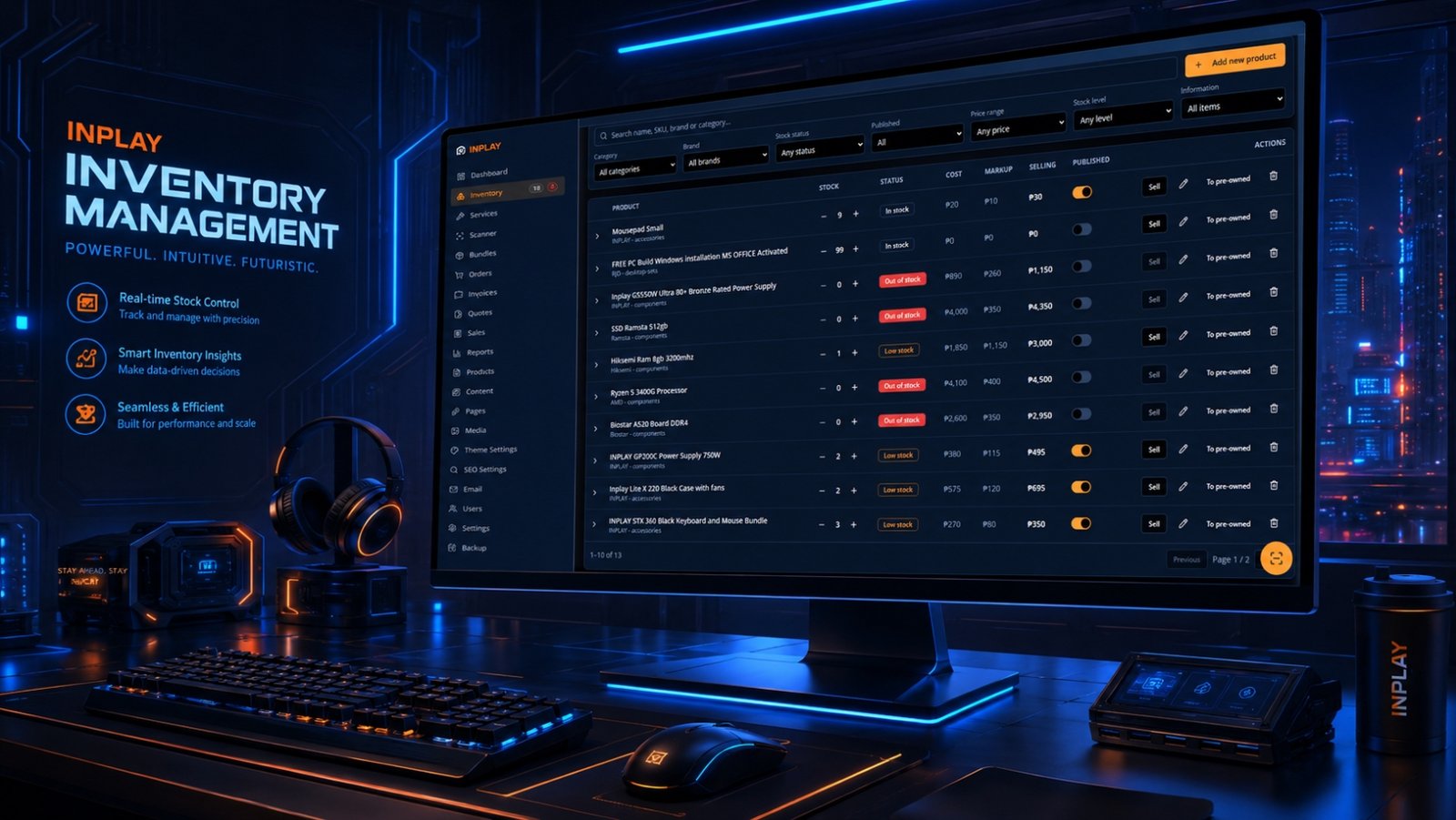
A centralized starting point for monitoring inventory, sales, reports, notifications, and other important business activity.
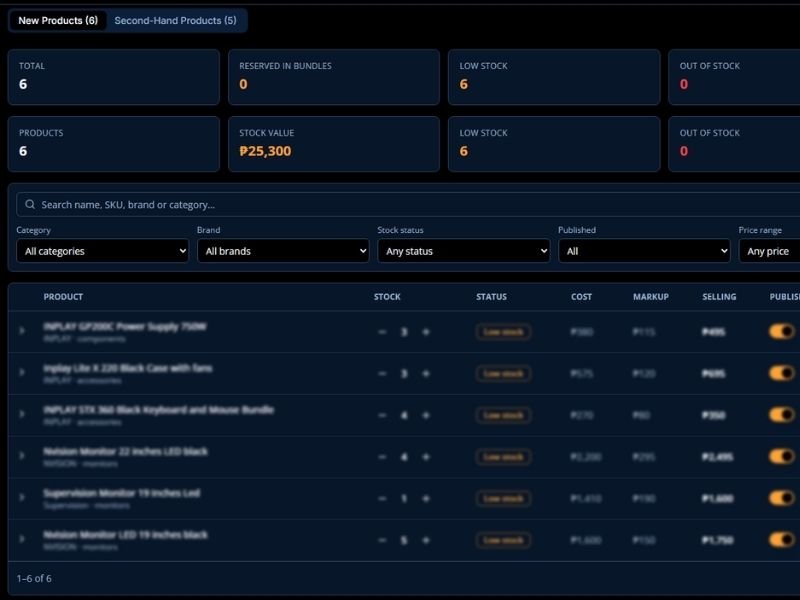
Dedicated new and pre-owned inventory views make products, stock quantities, costs, pricing, and availability easier to manage.
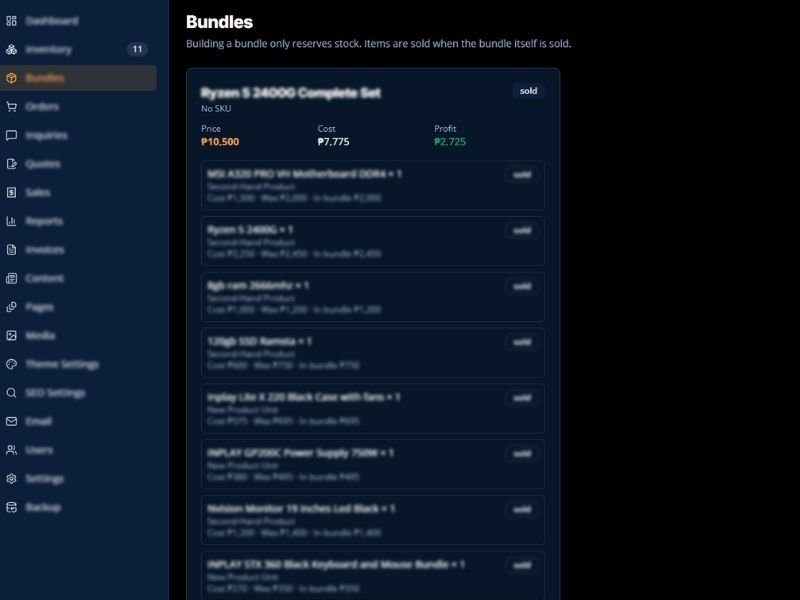
Computer bundles combine multiple inventory items while preserving a clear breakdown of components, quantities, costs, and selling prices.
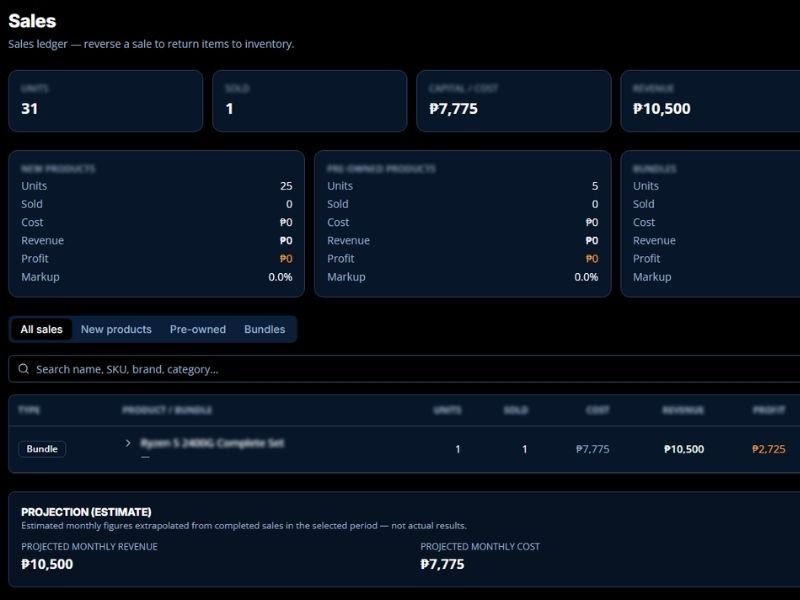
Completed transactions provide a clear breakdown of units sold, capital, revenue, profit, markup, and bundle performance.
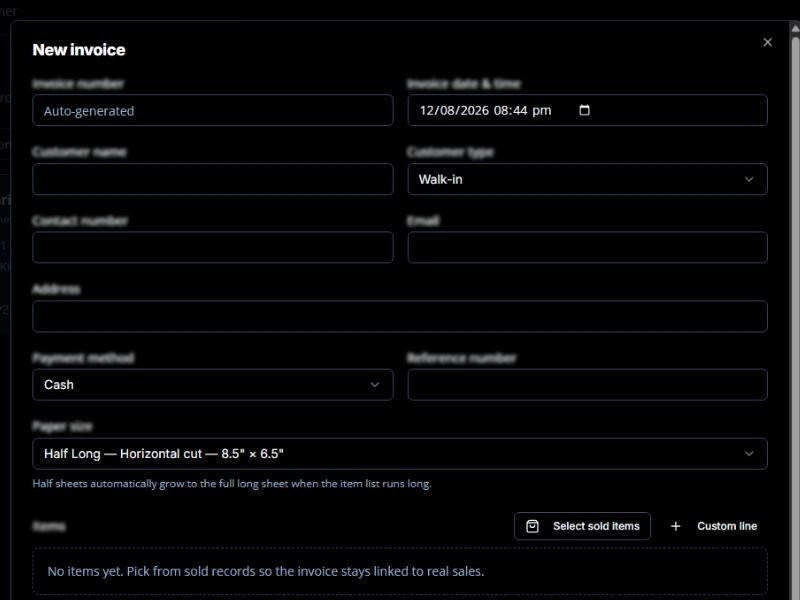
Generate customer-ready quotations and invoices from product and transaction data already managed inside the system.
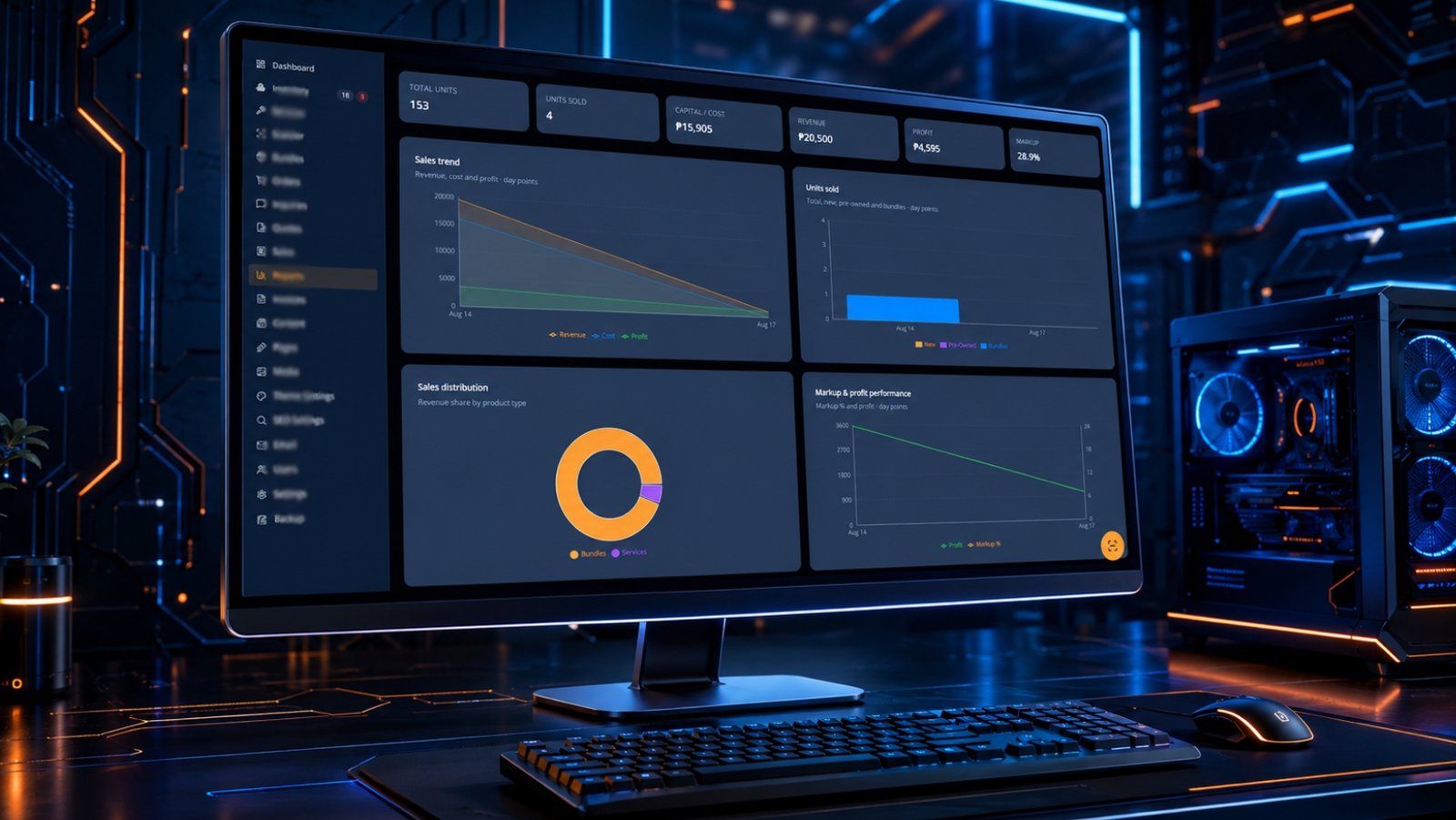
Sales reports, charts, and core administrative tools remain accessible across appropriate desktop, tablet, and mobile screen sizes.
The system follows the natural retail workflow of the shop, keeping inventory, bundles, sales, documents, and reporting connected as business activity moves forward.
Enter the product, specifications, condition, quantity, acquisition cost, selling price, and other required inventory information.
Update stock quantities, product details, costs, selling prices, and availability as inventory changes.
Combine available components into complete PC packages while keeping each included item and its pricing visible.
Record sold products or bundles so inventory and sales performance remain connected.
Create a customer quotation or invoice using the product, quantity, pricing, and transaction information stored in the platform.
Use date-based reports and charts to review units sold, capital, revenue, profit, markup, and overall sales performance.
The improvement comes from connecting inventory, sales, invoices, reports, and business data in one system instead of managing them separately.
AI can accelerate implementation, iteration, troubleshooting, and repetitive development work—but generating an interface is only one part of creating a useful business application.
The stack supports a connected public website and administrative system while keeping product, inventory, sales, reporting, and operational data centralized.
The RJD Computer Hub system demonstrates how a focused business platform can connect product inventory, bundles, sales, invoices, reporting, and administration into one clearer operational workflow.
Instead of relying on separate spreadsheets and disconnected tools, the project centers on the information RJD Computer Hub needs to manage everyday retail operations.
The result is a more structured foundation that gives the owner clearer visibility into stock, capital, revenue, profit, and business performance while leaving room for useful expansion as the company grows.
These are possible next steps, not automatic requirements. Each should be added only when it creates enough operational value to justify the added complexity.
The first PageSpeed audit after launching RJD Computer Hub showed strong results across performance, accessibility, best practices, and SEO.
Initial PageSpeed audit recorded after the first production launch. Scores may vary as content, functionality, and testing conditions change.
Many small businesses do not need another large SaaS platform packed with dozens of modules. They may need a focused system that connects the operational areas that matter most, such as inventory, sales, invoicing, reporting, and administration.
You may not need a massive software platform. You may just need a focused internal system built around the way your business actually works.
Kodcraft AI builds internal tools, workflow automations, micro-apps, websites, and practical custom systems designed to solve specific business problems without unnecessary complexity.
No technical brief needed. Tell us what you’re doing manually, what feels inefficient, or what you want your system to handle.